

Leaflet Details
| Title | Pelvic Health and Constipation |
| Department | Dietetics |
| Author(s) | Dietitians |
| Review Date | October 2025 |
| Next Review | October 2027 |
| Download | A5 Booklet PDF |
| Accessibility Options | Click on the Recite Me button to show our accessibility resources |
Patient Information
What is the link between pelvic health and constipation?
Constipation is a common reason for straining as it makes bowel motions difficult to pass. Excessive straining on the toilet weakens the pelvic floor muscles and can potentially lead to problems with urinary and faecal incontinence and prolapse.
What is constipation?
Constipation is common in both children and adults.
You are likely to have constipation if:
- You have not had a bowel movement at least 3 times during the last week
- The stools are often large and dry, hard or lumpy
- You are straining or in pain when you pass stools
You may find that hard stool passing through an area of inflammation in the colon can be particularly painful, and you might experience abdominal bloating and nausea.
Table 1: Conditions and factors which may cause or contribute to constipation
| Conditions | Factors |
|
|
What do your stools look like?
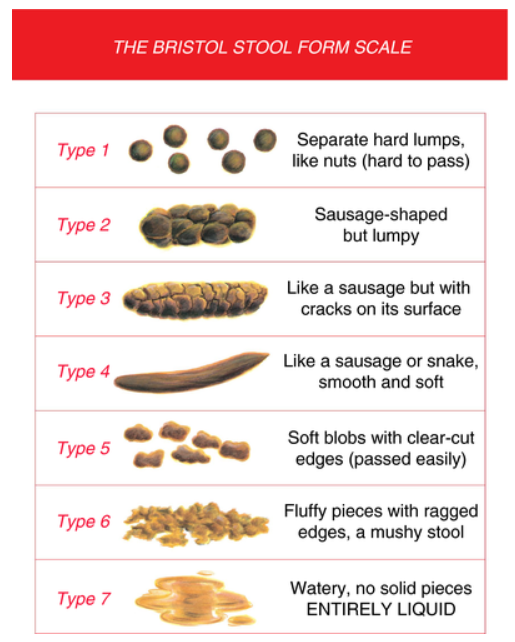
The Bristol Stool Form Scale below illustrates the types of stool a person may pass. The consistency of stool depends on how long it has spent in the colon. The longer it spends ‘in transit’, the more liquid is absorbed by the colon.
- Types 1-2 indicate constipation
- Types 3-4 are well-formed stools and a sign of a healthy system
- Types 5-7 indicate diarrhoea.
Table 2: Bristol Stool Form Scale
© 2018 Rome Foundation, Inc. All Rights Reserved
Dietary changes which may improve constipation
Eat more fibre
Aim for 30g of fibre a day, as part of a healthy balanced diet.
In the UK, most adults do not eat enough dietary fibre. Among other health benefits, including lowering high blood cholesterol level or high blood pressure, reducing the risk of heart disease, diabetes and colorectal cancer, fibre makes the stools softer and easier to pass.
There are two types of fibre - soluble and insoluble. A mix of both is vital for bowel health:
- Soluble fibre forms a gel when it combines with water and slows down our digestion (e.g. the flesh of fruit and vegetables, beans and lentils, oats, psyllium husk)
- Insoluble fibre does not break down and helps bulk out bowel motions (e.g. the skins of fruit and vegetables, seeds and wholegrains, kidney beans and chickpeas).
Ideas on how to increase your fibre intake
- Choose high fibre breakfast cereals (porridge, other oat-based cereals, Weetabix, Shredded Wheat, Ready Brek) and add 1 portion of fruit to your bowl
- Have 2-3 portions of fruit a day (one portion is 80g). Fruit high in fibre includes dried prunes, raisins, bananas, pears, apples, kiwifruits and berries
- Include at least 2 portions of vegetables and/or pulses with your lunch and dinner (one portion is 80g). Vegetables and pulses high in fibre include carrots, tomatoes, kale, green beans, sweetcorn, lentils, chickpeas and kidney beans
- Add extra vegetables and pulses to your pasta dishes, stir fries, stews and curries
- Opt for whole meal bread, pasta, biscuits and crackers, brown rice, quinoa, bulgur wheat or pearl barley
- Consider having a vegetable soup (either home-made or tinned) with a slice of whole meal bread as a main meal
- Keep the skin on vegetables and potatoes
- Choose seeds, nuts, vegetable sticks with hummus, popcorn, a portion of fruit, rye crackers or oatcakes as snacks
- Add linseeds (up to 1 tablespoon a day) to soups, yogurt, salads or curries. Ensure you have at least 150ml of water alongside each serving of linseeds.
Please note: If you are currently not eating enough fibre, increase your fibre intake gradually otherwise you may experience abdominal cramping, gut discomfort, bloating or diarrhoea.
Drink plenty of fluids
Dehydration makes it difficult to have healthy bowel movements. Everyone will need different amounts of fluid. Typically, the average adult needs between 1.5 to 2 litres of fluid a day. This is the equivalent to around 6-8 mugs or 8-10 glasses of fluid per day. Caffeinated drinks may irritate the bladder, so choose non-caffeinated drinks where possible.
Try to stick to:
- Water
- Herbal tea
- Sugar free squash
- Decaffeinated coffee or tea
If you do not enjoy plain water, try adding sliced cucumber or lemon juice to make it more appealing. If you prefer hot drinks, caffeine-free herbal teas like peppermint, lemongrass and ginger would be suitable options.
Increase physical activity
Exercise and physical activity stimulate contractions in the intestinal tract and promote bowel activity. Aim for 30 minutes of exercise most days of the week. Regular walking and/or aerobic exercise (e.g. biking, running, jogging, and swimming) can help to increase the speed at which stools move through your colon.
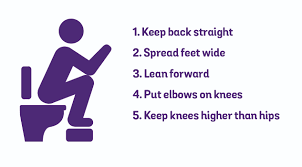
Change your toilet position
Changing the way you sit on the toilet may help to increase the speed at which you pass stools.
Table 3: Correct position on the toilet
Constipation and bloating
Constipation could be one of the possible causes for abdominal bloating. It might be useful to cut down on foods known to cause wind and bloating, such as: beans, onions, broccoli, cabbage, sprouts and cauliflowers.
Constipation and Probiotics
Probiotics contain beneficial bacteria intended to restore the equilibrium of the intestinal flora, or to preventing the flora getting out of balance. There are several types of probiotics on the market and there is enormous variability in the different products. There is some evidence of efficacy for these probiotic supplements: VSL#3, Bioflora, Alflorex, Biocare, Duolac and Symprove. Probiotics should be taken, at the dose recommended by the manufacturer, for at least 4 weeks while monitoring the effect.
When to seek support from your GP
You should see a doctor straight away if you have constipation and any of the following symptoms:
- Blood in your stools
- Bleeding from your rectum
- Unintentional and unexplained weight loss
- Feeling very tired all the time
- Constant pain in your abdomen
- Vomiting
- Fever
- Are taking medications which can trigger constipation
- A family history of bowel or ovarian cancer.
You can ask to be referred to a Registered Dietitian when:
- You feel there are specific foods triggering your constipation
- Despite making changes to your diet and lifestyle for at least 4 consecutive weeks, your bowel symptoms do not improve
- Your GP, your Consultant or another Health Care Professional feels that you would benefit from receiving tailored dietetic advice.
Available clinics within the Dietetic Department at St Peter’s Hospital:
We run several dietetic clinics that advise people on managing constipation including General Gastroenterology, Coeliac Disease and IBS Clinic. You will be offered an appointment in the one most appropriate for you.
At your appointment, a Registered Dietitian will ask you relevant information about your lifestyle and dietary habits and will discuss with you suitable treatment options.
If you would like more information about the Dietetic Department at St. Peter’s Hospital, please visit this website link: https://www.ashfordstpeters.nhs.uk/dietetics
Useful Resources:


