

Intravenous Iron (Iron Infusion): Intravenous iron is used to treat low iron levels (iron deficiency anaemia). It is prescribed when iron tablets have not worked, or you cannot tolerate them. The Doctor may also prescribe intravenous iron if you need to build up your iron stores quickly.
Leaflet Details
| Title | Intravenous Iron (Iron Infusion) |
| Department | Infusion Suite / Pharmacy |
| Author(s) | Azfa Machado, Rachel Cowles, Jemma Hives |
| Review Date | July 2025 |
| Next Review | July 2028 |
| Download | A5 Booklet PDF |
| Accessibility Options | Click on the Recite Me button to show our accessibility resources |
Patient Information
What is intravenous iron and what it is used for?
Intravenous iron is used to treat low iron levels (iron deficiency anaemia). It is prescribed when iron tablets have not worked, or you cannot tolerate them. The Doctor may also prescribe intravenous iron if you need to build up your iron stores quickly.
Why do we give it?
If left untreated, anaemia can make you feel very tired. You can get short of breath; your heartbeat can go very fast, and you may feel it beating in your chest (palpitations). Untreated anaemia can increase the chance that you will need a blood transfusion should you be unwell.
When should it not be given?
If you have:
- anaemia NOT caused by iron deficiency
- a history of allergic reaction (hypersensitivity) to injectable iron preparations
- liver problems such as cirrhosis
- too much iron (iron overload) or disturbances in utilisation of iron
- an active infection
- uncontrolled hyperparathyroidism (a condition where your body produces too much calcium).
How is it given?
Intravenous iron will be administered either on the ward as an inpatient or in the Infusion Suite as an outpatient, by a qualified nurse/midwife. If receiving in the Infusion Suite, you will need to allow approximately 1 hour for the appointment.
The nurse / midwife will administer the intravenous iron by an infusion (drip) into your vein. They will first insert a cannula (tube) into a vein. This will be flushed with a small amount of sodium chloride (sterile salty water) to make sure it is in the vein properly. You may feel the cool liquid going up your arm. If this is painful in any way, please inform the nurse/midwife.
The nurse / midwife will record your temperature, pulse, respiration rate and blood pressure prior to starting the infusion. These observations will be recorded every 15 minutes during the infusion and then for at least 30 minutes after the completion of the infusion.
Are there any risks?
Usually it is very safe but, like all medicines, intravenous iron can cause unwanted effects, although not everybody gets them.
Common side effects (may affect up to 1 in 10 people):
- Nausea
- Skin reactions at or near injection site including redness of the skin, swelling, burning, pain, bruising, discolouration, leakage to the tissue around the site of infusion, irritation
- Rash
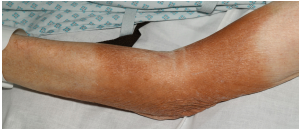
There is an up to 1 in 10 person risk of an extravasation injury (where the iron leaks into the skin) with intravenous iron. If this happens it could cause long term, or even permanent discolouration or staining of the skin - example below.
Severe allergic reactions may occur; however they are rare.
Tell the nurse / midwife immediately (pressing your bedside alarm if needed) if you experience any of the following signs and symptoms that may indicate a serious allergic reaction:
- Swollen face, tongue or throat
- Difficulty in swallowing
- Hives (an itchy rash)
- Shortness of breath
We have provided you with the patient information prepared by the manufacturer of this medicine which will provide information about the side effects.
Follow up care
You will have a follow up after the iron infusion by either your GP or as an out-patient follow up. If you have received intravenous iron as an in-patient (admitted to a ward), your discharge summary will provide details of the next steps.
You will need blood tests to be taken to make sure your iron levels have improved. Your doctor or nurse will advise you when this should be done.
The doctor who has organised the iron infusion will let you know if you should start taking iron tablets again after the infusion. Oral iron tablets should not be taken for 5 days after administration of intravenous iron.
Further Information
If you have any questions, ask your nurse, doctor or hospital pharmacist.
You can also refer to the intravenous iron manufacturer information leaflet or contact the Medicines Information team (service provided by Frimley Park Hospital).
Medicine Information Patient Helpline Telephone: 0300 6136751 (Monday - Friday 9am - 5pm)
Email:


