

Adult Extravasation: Extravasation is the accidental leakage of drugs outside of the vein into the surrounding tissue. This can lead to pain and may result in localised skin damage. The nurse will have noticed the drug is not flowing easily and would have stopped the infusion. You may have experienced pain, swelling and/ or stinging and other localised skin changes.
Leaflet Details
| Title | Adult Extravasation |
| Department | IV Access and Management |
| Author(s) | Jessica Akers |
| Review Date | September 2025 |
| Next Review | September 2028 |
| Download | A4 Handout PDF |
| Accessibility Options | Click on the Recite Me button to show our accessibility resources |
Patient Information
Introduction
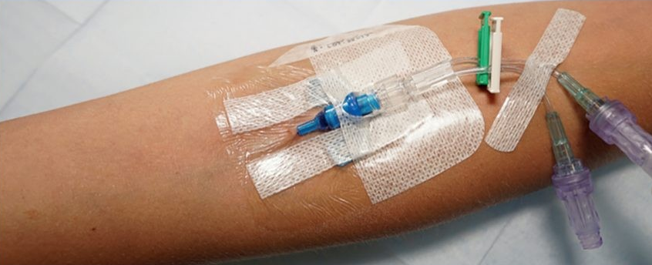
You have been given this leaflet as we believe a medicine that you have received through your vein has leaked out into the surrounding tissue and caused Extravasation.
What is extravasation?
Extravasation is the accidental leakage of drugs outside of the vein into the surrounding tissue. This can lead to pain and may result in localised skin damage. The nurse will have noticed the drug is not flowing easily and would have stopped the infusion. You may have experienced pain, swelling and/ or stinging and other localised skin changes.
Why did this happen?
Extravasation is a rare complication of intravenous therapy, it is not always possible to prevent this completely, but precautions can be taken to prevent this.
What treatment have I received to prevent further tissue damage?
Your nurse has given you the recommended treatment for the extravasation this may have included cooling or warming and/ or elevating the affected area. They may have drawn around the affected area. Whilst you are in hospital we will continue to monitor this area. Please tell the nurse looking after you if you notice any changes or are concerned. If you have already been discharged and are worried, please seek medical advice.
Checking the area
Check the area daily for the following:
- Change in colour or increase in redness
- Localised swelling
- Blistering, peeling or flaking
- Increased pain or discomfort - leading you to be unable to exercise the arm or hand
If you answer YES to any of above, then please escalate to the nursing staff or if you have been discharged seek medical advice.
What else do I need to do?
- Gently exercise the affected arm or hand
- Take painkillers if required
- Do not apply any medicated lotion unless prescribed by a medical professional
- Do not expose the area to direct sunlight until area fully healed
- Avoid wearing constricting clothing on that area
- It is advised not to get the area wet and to protect the area when bathing (or having a shower)
Reference sources
- Picture - B Braun
- National Infusion and Vascular Access Society (NIVAS) 2024 Infiltration and Extravasation: A toolkit to improve practice (Version 1)
- Royal College of Nursing Standards for Infusion Therapy, London, eighth edition 2021


