Choosing Where to have Your Baby: Choosing where to give birth is an important decision. Your choice should be based on your health, pregnancy history and personal preferences. You can discuss your options with your midwife who can provide personalised advice. Wherever you chose, the place should feel right for you and you can change your mind at any point in your pregnancy.
Leaflet Details
| Title | Choosing Where to have Your Baby |
| Department | Maternity |
| Author(s) | Vicky Kirbell |
| Review Date | August 2025 |
| Next Review | August 2027 |
| Download | A5 Booklet PDF |
| Accessibility Options | Click on the Recite Me button to show our accessibility resources |
Patient Information
Introduction
Choosing where to give birth is an important decision. Your choice should be based on your health, pregnancy history and personal preferences. You can discuss your options with your midwife who can provide personalised advice. Wherever you chose, the place should feel right for you and you can change your mind at any point in your pregnancy.
This leaflet gives information about your birth options at Ashford and St Peter’s Hospitals NHS Foundation Trust. It is based on the Birthplace Study (2011) and NHS guidance. It is aimed at people planning a vaginal birth. If you're thinking about having a planned caesarean section, please read the Elective Caesarean Section leaflet and talk to your maternity team for more information.
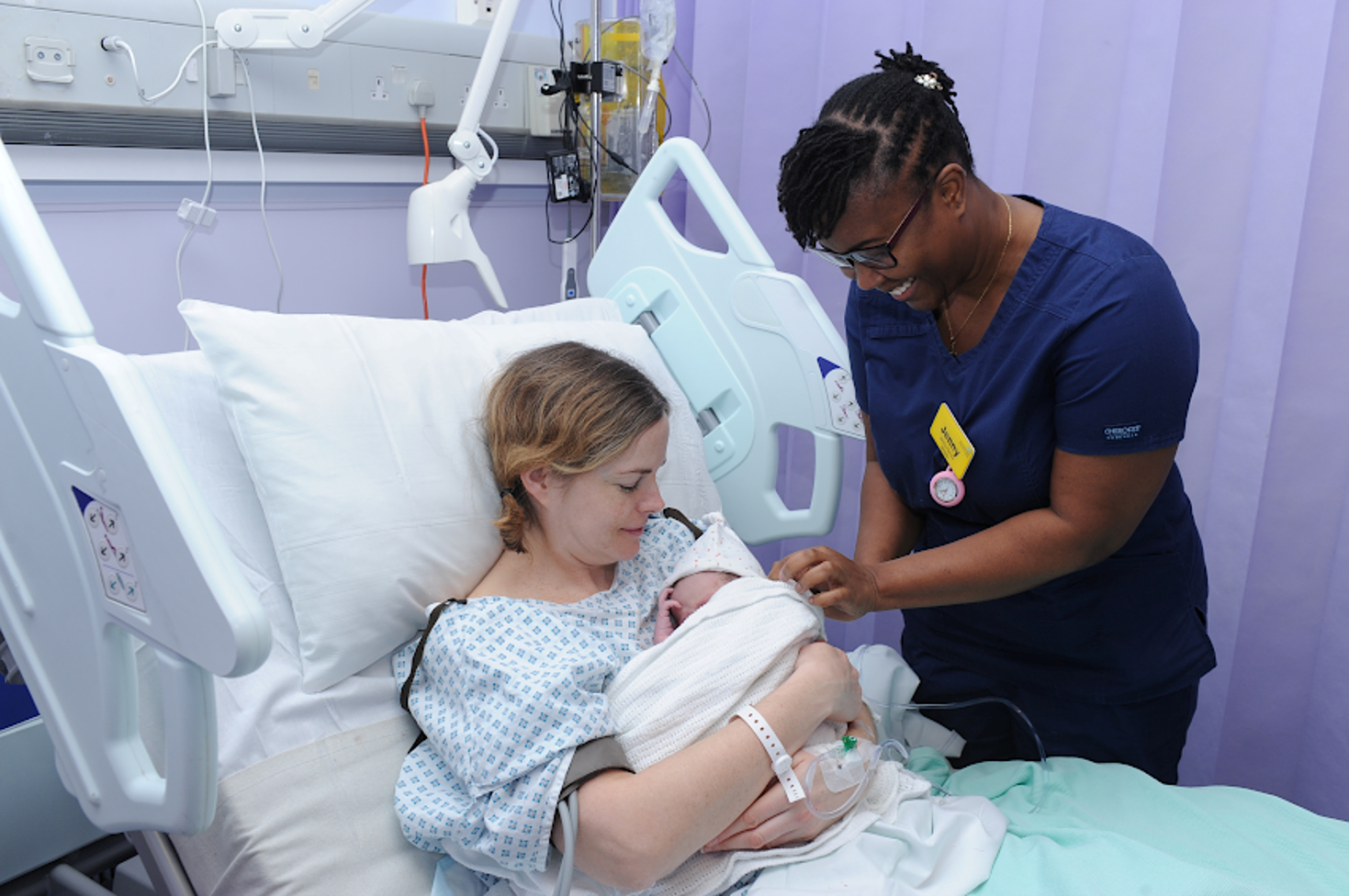
Home Birth
A home birth means giving birth in your own home, supported by our community midwives. This is usually recommended if you have a straightforward pregnancy, and both you and your baby are well.

Advantages:
- You may be more relaxed in familiar surroundings
- There is a lower likelihood of medical interventions (e.g. caesarean section, episiotomy), if your pregnancy is straightforward.
- Increased likelihood of being looked after by a midwife you may have met already in your pregnancy
- Less risk of infection
- Not having to interrupt your labour to travel into hospital
Considerations:
- Transfer to hospital may be needed (around 45% for first-time mothers, 12% for those who have given birth before).
- Some pain relief options may not be available at home, for example an epidural. You might choose to use the gas and air (Entonox), a warm bath, a birthing pool, a TENS machine and any relaxation techniques you may have learnt.
Abbey Birth Centre
The Abbey Birth Centre is our alongside Midwifery Led Unit (MLU). This is part of the maternity hospital and is recommended if you have a straightforward pregnancy, and both you and your baby are well.

Advantages:
- More relaxed and homely environment
- Lower likelihood of medical interventions, if your pregnancy is straightforward.
- Three birthing pools available
- Midwife-led care with a focus on physiological birth
Considerations:
- You may need to be transferred to labour ward if there are any complications (around 40% for first-time mothers, 13% for those who have given birth before)
- Some pain relief options may not be available in the birth centre, for example an epidural. You can use the gas and air (Entonox), pethidine, a warm bath, a birthing pool, a TENS machine, aromatherapy and any relaxation techniques you may have learnt.
- For an epidural, a short transfer to Labour Ward would be needed
Labour Ward
Our labour ward has a pool room, birthing rooms and home from home rooms as well as two maternity operating theatres. The neonatal (baby) unit is based next door.
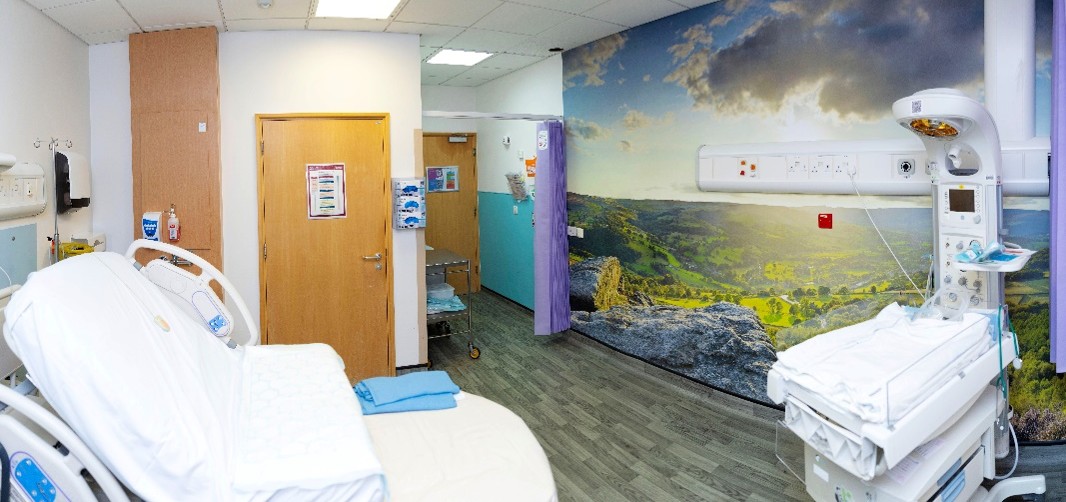
Advantages:
- Direct access to additional medical support and interventions if needed
- Pain relief options include: gas and air (Entonox), pethidine, the birthing pool, epidural, fentanyl patient-controlled analgesia and any relaxation techniques you have learnt.
Considerations:
- For those with straightforward pregnancies, there is a higher likelihood of medical interventions such as, as induction, continuous monitoring, assisted birth (forceps / ventouse), and caesarean section
- Birth on the labour ward is recommended for high-risk pregnancies (e.g., twins, breech presentation, high blood pressure, previous caesarean)
Evidence from the Birthplace Study
Homebirth |
|
Abbey Birth Centre (Midwifery-Led Unit) |
|
Labour Ward (Consultant-Led Unit) |
|
Birth choices outside usual recommendations
Should you wish to discuss choices outside of usual recommendations, your community midwife will offer you a referral to our Birth Options Clinic with our Consultant Midwives for an appointment. This can be made at any stage in your pregnancy although we would encourage starting these discussions as early as possible.
The Birth Options service gives you time to talk, share your concerns and preferences and understand the risks and benefits of recommended care. The service focuses on your choices, informed decision-making, and open communication to create a personalised care plan.