

Expression and Storage of Your Colostrum Before Your Baby is Born: Colostrum, the milk first available when the baby is born, is the best food for your baby and will help maintain your baby’s blood sugar at a normal level.
Leaflet Details
| Title | Expression and Storage of Your Colostrum Before Your Baby is Born |
| Department | Maternity / NICU |
| Author(s) | Liz Jennis, Infant Feeding Lead |
| Review Date | February 2023 |
| Next Review | February 2025 |
| Download | A4 Handout PDF |
| Accessibility Options | Click on the Recite Me button to show our accessibility resources |
Patient Information
Why?
Breast milk is specifically produced for your baby.
Breast milk helps protect your baby from many diseases both early and later on in life. It can reduce the incidence of gastroenteritis, chest, and ear infections. It reduces the incidence of type 1 diabetes, obesity, heart disease and assists in baby brain development. It may also protect you from breast cancer, ovarian cancer, and osteoporosis.
Colostrum, the milk first available when the baby is born, is the best food for your baby and will help maintain your baby’s blood sugar at a normal level.
Collecting colostrum antenatally has health benefits for both breast and bottle-fed babies.
How?
Start expressing and storing your colostrum from 36 weeks of pregnancy or within 48 hours.
Keep expressing fresh colostrum between feeds once your baby is born. Give all your expressed colostrum to your baby IN ADDITION to breastfeeds for the first 3 days after birth or until you see/hear your baby swallowing rhythmically during breastfeeds.
Learn how to give colostrum safely to your baby by attending the infant feeding workshop (every Wednesday evening 7 - 9.30pm. New Life Church, Old Woking GU22 9BX) or asking your midwife to show you.
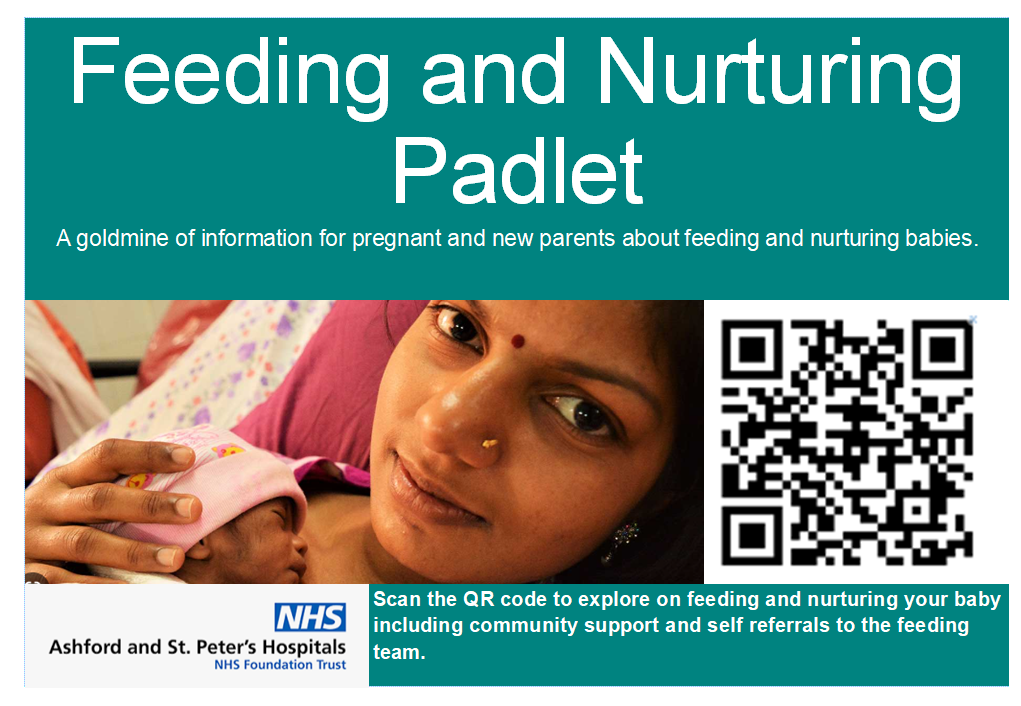
Collect syringes and ask for practical support from your community midwife during antenatal appointments or the infant feeding team in the community support groups listed on the Feeding and Nurturing Padlet below:
https://padlet.com/ejennis/78eyapsnxur3f7vh
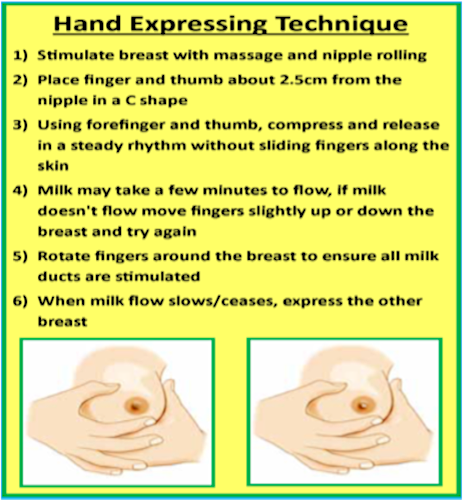
How to hand express
Watch this video on how to hand express https://www.unicef.org.uk/babyfriendly/baby-friendly-resources/breastfeeding-resources/hand-expression-video/ also found in the collecting colostrum antenatally section of the feeding and nurturing padlet.
|
Initially you may not get any colostrum, or a few drops only; this is normal, do not get disheartened. Remember a newborn baby’s stomach is only as big as a marble - so they will only need small amounts of colostrum at each feed. You will not run out of colostrum if you collect it before your baby is born but do not worry if you cannot express colostrum at this time, we will help you once your baby is born as when your placenta is delivered your production of colostrum will definitely be triggered. |
- Collect your colostrum into syringes, a small clean cup or teaspoon.
- Start by expressing once or twice a day for no more than 3-5 minutes. This can be built up to as often as you wish to about 10 - 20 minutes.
- Collect and store every single drop of colostrum you express in syringes. Remember, it is precious food for your baby.
- Unless it is full you can add to the same syringe for a whole day and keep the syringe in coldest part of fridge between expressions.
- Label each syringe with your name and the date the colostrum was expressed. Write ANTENATAL clearly on the label also.
- At the end of each day transfer your filled syringes to a lidded box or a clean, sealable sandwich in the freezer also labelled clearly with your name.
NB. Unlabelled syringes cannot be stored in the hospital fridge / freezer. Syringes not inside a lidded box or sealed bag cannot be stored in the hospital fridge/ freezer.
Note
You may find that when you express you feel your womb going hard and relaxing - this is called ‘Braxton Hicks’ contractions. Don’t worry about these unless they begin to feel like period type cramps or mild labour contractions. This is rare, but if this happens, you should stop expressing and rest.
If they don’t stop and you think you might be in labour, you should telephone the Delivery Suite triage on 01932 722361.
Transporting your colostrum to hospital
- Take your colostrum with you to hospital in a lidded box or sealable sandwich bag also labelled with your name.
- Transport your milk in an insulated bag with ice / ice packs.
- Frozen colostrum can be put in the ward freezer. Defrosted colostrum will be put in the fridge and must be used within 24 hours. Freshly antenatally expressed colostrum can be used up to 48 hours if stored in the fridge.
- The number of syringes and the location of the fridge/ freezer they are stored in will be documented in your notes by the midwife who transferred it.
Giving your baby your expressed colostrum
- Well babies: Most term, well babies latch and breastfeed within an hour of birth and go on to breastfeed responsively. Give your expressed colostrum in addition to breastfeeds for the first 3 days or you see/ hear rhythmical swallowing during breastfeeds. One syringe per feed is usually enough to start with.
- Sleepy babies: For many reasons some babies do not breastfeed within an hour of birth. We advise that all babies receive their mother’s breastmilk within 1 hour of birth so give your colostrum to your baby if they are reluctant to feed.
- Maintain skin to skin and wake sleepy babies for breastfeeds every 2-3 hours. Give more colostrum if your baby has not latched after 2-3 hours and hand express fresh colostrum. Repeat every 2-3 hours until your baby starts breastfeeding responsively. One syringe (even if it is not full) per feed is usually enough to start with.
- If baby is still not feeding well at 24 hours we advise you use a breast pump at least 8 times in 24 hours including once overnight to stimulate and maximise lactation until your baby is breastfeeding responsively.
- Check the syringe label with your midwife to double check the milk is your own before giving it to your baby. We will show you how to give your milk safely.
- Your feeding leaflet will guide you how to recognise effective feeding and how to seek feeding help and support.
- If you are having a caesarean section, be sure to take a syringe of colostrum with you to theatre.
- Ask your midwife to give you your storage box and any unused colostrum still within date when you are discharged home.
References
Cox, S. (2010) An ethical dilemma: should recommending antenatal expressing and storing of colostrum continue Breastfeeding Review 18(3):5–7.
Cox, S. (2006) Expressing and storing colostrum antenatally for use in the newborn period. Breastfeeding Review 14(3):11–6.
Going Baby Friendly. UNICEF UK
(CEMACH) 2005. Pregnancy in women with Type 1 and Type 2 diabetes in 2002-2003 in England, Wales and Northern Ireland. (Diabetes Multidisciplinary Resource) CEMACH. London.
NICE Clinical (2008) Guideline NG3: Diabetes in Pregnancy. https://www.nice.org.uk/guidance/ng3
Effect of nipple stimulation on uterine activity and on plasma levels of oxytocin in full term, healthy, pregnant women.by K Christensson, B A Nilsson, S Stock, A S Matthiesen, K Uvnäs-Moberg
Contact numbers for further advice
Antenatal clinic midwife. Tel: 01932 722389
Diabetic specialist midwife. Tel 01932 722389
Infant Feeding Team.
Useful resources
- https://globalhealthmedia.org/video/
- DoH ‘Off to the best start’. DoH and UNICEF
- National Breastfeeding helpline, 0300 100 0212
- https://www.breastfeedingnetwork.org.uk


