

Personalised Care will benefit up to 2.5 million people in the UK by the end of 2024. It gives patients the same choice and control over their mental and physical health that they have come to expect in every other aspect of their life. A one-size-fits-all health and care system simply cannot meet the increasing complexity of people’s needs and expectations. Personalised care is one of the five major practical changes to the NHS as detailed in the NHS Long Term Plan.
Personalised Care allows you to take an active role in the way your care is planned and delivered by identifying your individual concerns and support needs. It puts you in control of your care, with help from your specialist cancer team.
There are lots of things that you can do to support your own health during and after cancer treatment. Some of this can be done without the involvement of your clinical team, such as physical activity and healthy eating.
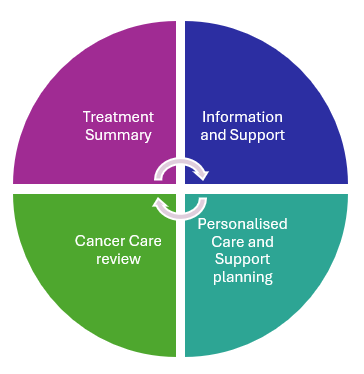
There are four elements that support personalised care:
- Personalised Care and Support Planning (based on Holistic Needs Assessments (HNA)) ensures people’s physical, practical, emotional, and social needs are identified and addressed at the earliest opportunity. You should be offered an HNA by your Cancer Nurse Specialist or Support Worker to identify any issues or concerns you might have.
- End of Treatment Summaries provide both the patient and their GP with valuable information, including a detailed summary of treatment completed, potential side effects, signs and symptoms of recurrence and contact details to address any concerns.
- Health and Wellbeing Information and Support includes the provision of accessible information about emotional support, coping with side effects, financial advice, getting back to work and making healthy lifestyle choices. This support will be available before, during and after cancer treatment.
- Primary Care Cancer care reviews are an appointment with the patient and GP within 12 months of diagnosis. It provides an opportunity to raise any concerns, discuss their cancer experience and gain an understanding of help and support that can be provided.
Holistic Needs Assessment
An HNA gives you a chance to think about any concerns you may have and discuss possible solutions. The concerns could be:
- physical
- emotional
- practical
- financial
- spiritual
By talking through your concerns, your healthcare professional can create a care plan to address your care and support needs.
Why have an HNA?
We want to make sure that all patients diagnosed with cancer at Ashford and St Peter’s Hospitals are offered an HNA. We will support you to make decisions about your treatment and ensure you live as well as possible following a cancer diagnosis.
An HNA can help us make sure you get information and support for any symptoms or concerns you have regarding your cancer diagnosis. We can also use it to refer or signpost you on to other services that can help you.
Personalised Stratified Follow Up Service (PSFU)
PSFU has been specifically designed to support you when you have completed your treatment. This type of supported self-management follow up is where you, the patient, are in control. Instead of being offered regular visits, you can make an appointment to see us if you have worries or concerns following your consultation. It is based on evidence showing that symptoms and concerns are addressed more quickly if patients report them as and when they occur, rather than waiting for a routine appointment.
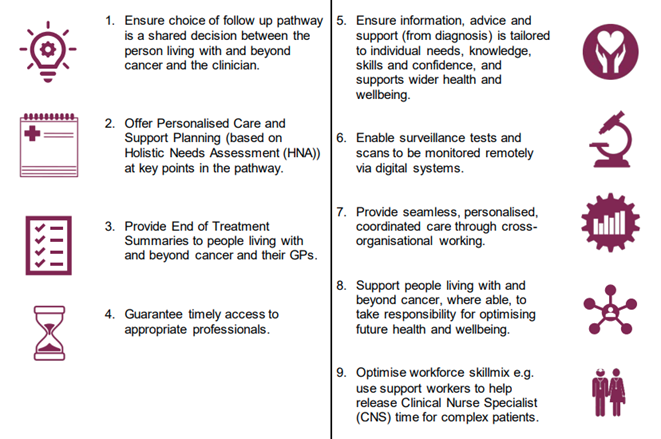
The key principles of personalised stratified follow up include:
Who is PSFU for?
If you are a patient with cancer being seen by our breast, colorectal, prostate, or endometrial speciality teams, then supported self-management may be an option for you at Ashford and St Peter’s Hospitals NHS Foundation Trust.
Our clinical teams will use an evidence-based approach, with all patients being managed and tracked through a dedicated cancer support worker and personalised care pathway tracker using a cancer information system.
If you are eligible for PSFU, you may or may not have regular investigations. If investigations are required, the results will be reviewed by an appropriately qualified staff member, and you will then be informed of the results.
What will I be offered if I am eligible for PSFU?
If you have completed your primary cancer treatment with one of the above specialties and are eligible for PSFU, you will be offered:
- Information about signs and symptoms, which could suggest your cancer has recurred or progressed, or which may be the side-effects of treatment
- Verbal and written guidelines on who to contact if you have concerns in the future, aligning with a system that allows rapid re-entry into the specialist cancer service as and when it is required
- Regular surveillance scans or tests (depending on cancer type), with quicker and easier access to results so that any anxiety is kept to a minimum
- Effective needs assessment at the point of diagnosis and end of treatment that identifies and addresses any outstanding needs – ensuring you have knowledge and confidence to self-manage. This will incorporate a holistic needs assessment and care plan, treatment summary, and health and wellbeing events to improve outcomes and co-ordination of care.
If you are being seen by our breast, colorectal, prostate, or endometrial speciality teams and have further questions about PSFU, please speak to your clinical nurse specialist.
If you are not eligible for PSFU, you will continue on a shared care pathway between primary and secondary care. We will ensure all patients are able to highlight any concerning symptoms and have continued access to the specialist team and support resources when required.


