

Anatomical Total Shoulder Replacement
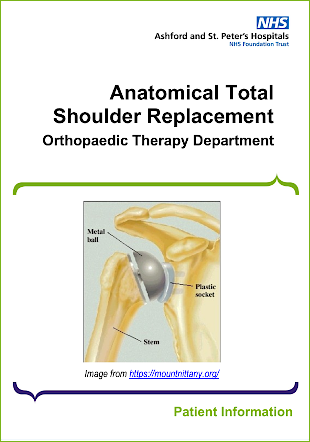
A total shoulder replacement will involve the removal of the damaged portions of the joint. Traditionally, the head of the humerus (ball) is removed and replaced with a metal head and stem. The stem is inserted into the shaft of the long bone of the arm (the humerus) and can vary in size depending on clinical need (please see below). The socket, which is usually comprised of plastic (polyurethane) is then inserted into the glenoid (a portion of the shoulder blade).
Capsular Release: Arthroscopic Release of a Frozen Shoulder
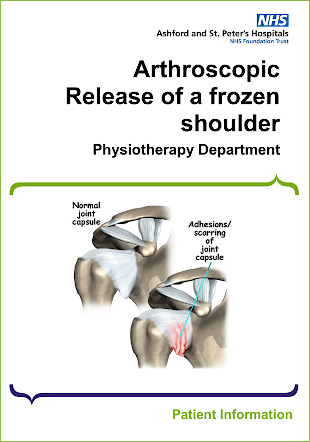
A frozen shoulder is a disorder of the shoulder capsule, a thin tissue which surrounds the shoulder joint. The capsule becomes inflamed and stiffens causing restricted movement and pain.
Reverse Geometry Shoulder Replacement
The Rotator Cuff is a group of four muscles that come from the shoulder blade and attach onto the ball of the ball and socket joint. It is made up of the Supraspinatus, the Infraspinatus, Subscapularis and Teres Minor (please figure 2). Their primary action is to maintain the position of the ball within the socket throughout movement. They also contribute to individual movements.
Rotator Cuff Related Shoulder Pain
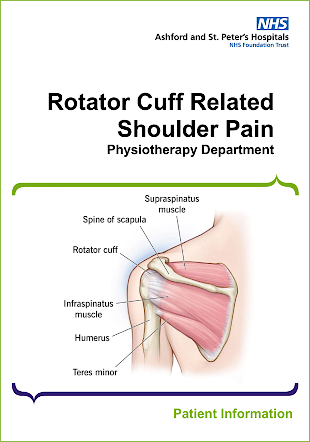
The rotator cuff is a group of four muscles and tendons which connect the shoulder blade to the top of the humerus (arm bone). These muscles work together to stabilise the shoulder through movement. Rotator cuff related shoulder pain is an umbrella term that describes any pain related to these muscles and tendons. The rotator cuff is implicated in around 70% of all shoulder pain.
Rotator Cuff Repair
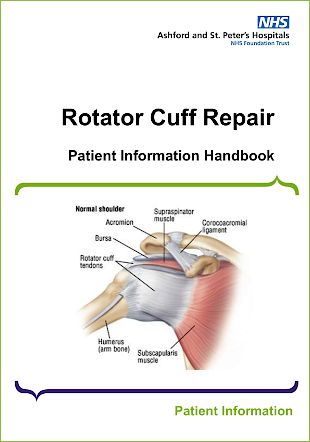
The Rotator Cuff is a group of four muscles that come from the shoulder blade and attach onto the top of the humerus (upper arm bone). It is made up of the Supraspinatus, the Infraspinatus, Subscapularis and Teres Minor. Their primary action is to maintain the position of the head of the humerus within the socket of the shoulder joint throughout movement of the arm, thus they are very important in the stability of the shoulder joint. They also contribute to individual movements.
Shoulder Stabilisation
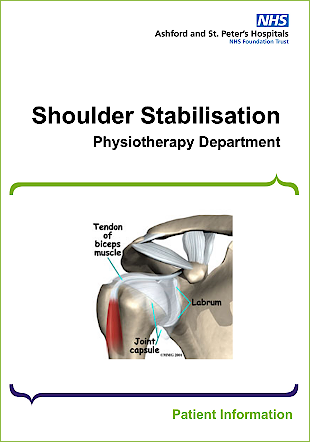
The shoulder joint is a ball and socket joint and is designed for mobility rather than stability. Due to this it requires a mobile socket and a mobile ball within the socket to achieve full movement. Therefore, to give the joint some stability and thus prevent dislocations occurring during normal movement the shoulder has several structures to maintain stability.
Subacromial Decompression
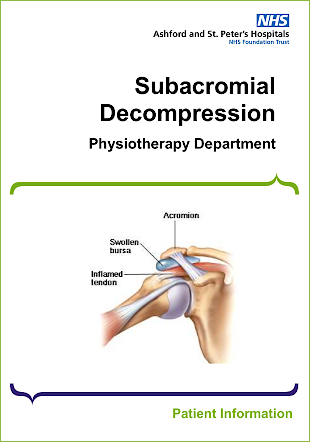
The subacromial space is the space between the ball (humeral head) and the tip of the socket (the acromion). There are many structures that lie in this space including tendons belonging to the rotator cuff muscles and a fluid sack known as a bursa. The subacromial bursa is designed to prevent friction occurring between the tendons and the bone. During subacromial impingement the structures in the subacromial space become compressed.


