

What is it?
Carpal tunnel syndrome (CTS), also known as median nerve compression, is a condition characterized by increased pressure on the median nerve at the wrist, that can lead to numbness, tingling or weakness in the hand. The carpal tunnel is formed by the natural arch of the carpal (wrist) bones as well as a thick band called the transverse carpal ligament. Within this tunnel, tendons that bend the fingers and thumb, along with the median nerve, pass through. The median nerve originates in the neck, travels down the upper arm into the forearm, passes through the carpal tunnel and is responsible for providing feeling in the thumb, index finger, middle finger and half of the ring finger. It also controls the muscles at the base of the thumb (thenar muscle).
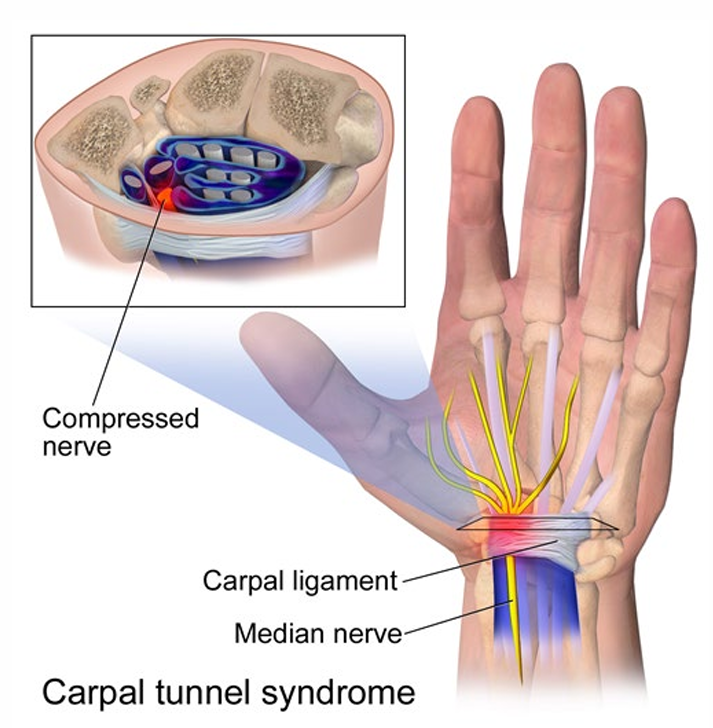
More information can be found via the NHS Website.
What is the cause and risk factors of carpal tunnel syndrome?
There is limited research about the exact cause of carpal tunnel syndrome. However, any additional pressure in the wrist can lead to irritation and swelling of the surrounding tissue, which may further narrow the carpal tunnel area.
Any factor listed below can contribute to the development of carpal tunnel syndrome:
- Age 30 to 60
- Being assigned female at birth
- Extra fluid retained during pregnancy or menopause
- Wrist injuries: fractures, sprains, dislocations
- Repetitive hand and wrist movements
- Regular use of vibrating machinery
- Previous diagnosis of diabetes, rheumatoid arthritis, arthritis
- Ganglion cyst
What are the symptoms of carpal tunnel syndrome?
- Numbness and/or tingling sensation in the wrist hand or fingers. Often worse at night (waking up at night, having to shake hand)
- Pain in the wrist, hand or fingers
- Weak grip (e.g. difficulty carrying bags, clumsiness)
- Dropping items
- Problems with fine motor skills (e.g. fastening a button)
Diagnosis and tests
A clinician will combine the history of your symptoms with physical tests to confirm a diagnosis of carpal tunnel syndrome. They may ask you to complete a Boston Carpal Tunnel Syndrome Questionnaire (BCTQ), included at the end of this leaflet, to better understand your condition and guide your treatment. They will assess your wrist, hand, fingers and may complete some of the tests listed below:
- Tinel’s sign
- Phalen’s test
- Reverse Phalen’s test
- Durkan’s test
- Berger’s test
- Hand elevation test
These tests are intended to increase pressure of the median nerve to reproduce your symptoms.
In some cases, further tests may be ordered to help determine the severity of your condition, location of the nerve compression and whether other nerves are affected:
- Electromyography (EMG) - to assess the health and function of your muscle and the nerves
- Nerve conduction studies (NCS) - to check how fast electrical signals move though the nerves
- Wrist X-Ray - to check for other problems, such as arthritis or fracture
Treatment
Treatment of carpal tunnel syndrome usually begins with nonsurgical (conservative) management. In pregnant women, CTS symptoms often improve within the first three months postpartum, however some women may need further interventions. If conservative measures do not relieve your symptoms, you might require surgical option.
Nonsurgical treatment (listed below) is used to treat mild to moderate symptoms of CTS:
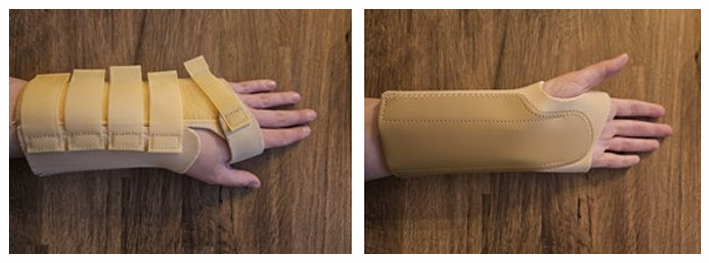
- Wrist splint - a splint will support your wrist in a neutral position and take pressure off the median nerve. It is advised to wear it overnight for at least 6 weeks.
- Exercises:
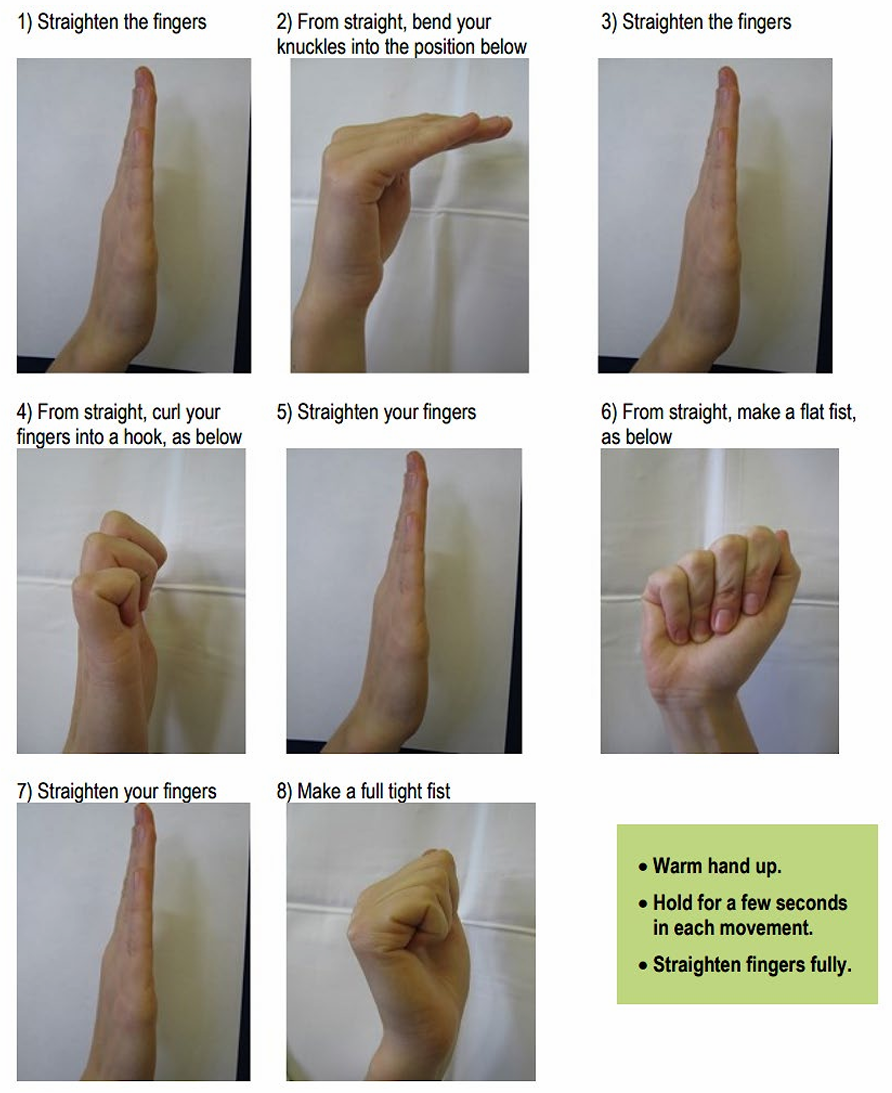
- Differential tendon glides (attached below) -
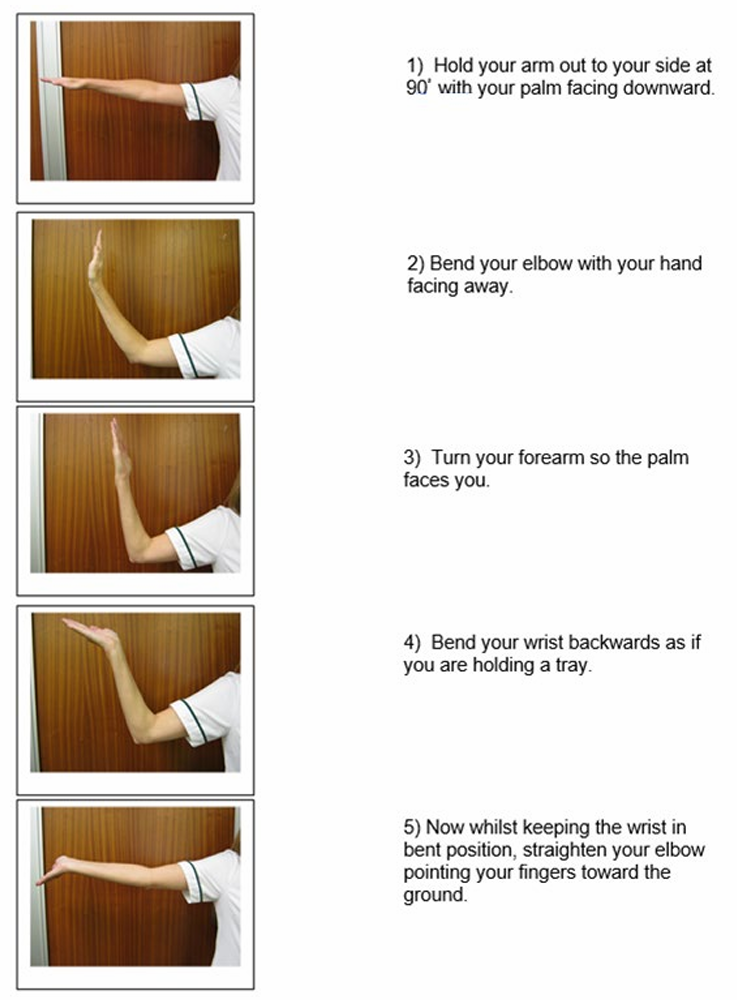
- Median nerve gliding (attached below)
- Corticosteroid (cortisone) injection – it is administered into carpal tunnel to help alleviate pain. In some cases, ultrasound may be used to guide the injection. Corticosteroids work by reducing inflammation and swelling, thereby relieving pressure on the median nerve.
Futura splints can be bought at your local pharmacy and they are to be worn over night only.
Surgical treatment
Surgery may be indicated if your symptoms are severe or do not respond to nonsurgical treatments.
The primary goal of carpal tunnel surgery is to relieve pressure on the median nerve by cutting the transverse carpal ligament. After the surgery, the ligament tissue gradually heals, allowing more space for the nerve and tendons. While the skin typically heals within a few weeks, the internal healing process may take a bit longer.
Carpal tunnel release surgery is usually an outpatient procedure, which means you can go home the same day.
Your surgeon will explain what to expect and provide you with recovery guidelines.
For more information, please see our Post-Op Advice: Carpal Tunnel Decompression leaflet.
Exercises: differential tendon glides
Exercises - Median nerve gliding
Download our Carpal Tunnel leaflet


