

When you have a hand or finger injury, the object of treatment is to keep the fracture well-aligned while it heals using a plaster cast or strapping and to rehabilitate the injured hand back to normal function.
Treatment
If your hand has been treated in a plaster cast, your hand and fingers may be very stiff when the cast is removed.
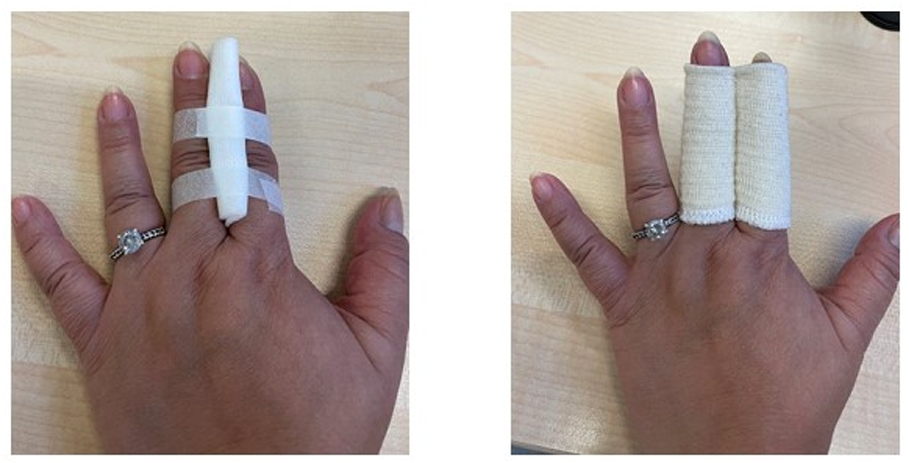
If you are being treated with strapping, the strapping secures the injured finger to an uninjured finger so that it heals in a good position.
To apply strapping, follow these steps:
- Place a piece of gauze between the two fingers to be strapped.
- Apply strips of tape between the knuckles so that the joints can still bend (if you are allergic to Elastoplast ask your nurse, therapist or pharmacist for alternatives)
- Apply strapping tape firmly, but not so tight that it cuts off your circulation
- Do not let your fingers twist or overlap each other.
- Alternatively, you may have been provided with a finger sleeve.
Skin Care
Change the strapping every day. After removing the strapping, wash your fingers carefully, keeping them together. Dry your hands thoroughly and reapply the strapping as shown above. Do not get the strapping wet.
If you have had a cast removed, your skin may feel dry and scaly. Your hand can now be soaked and washed, and hand cream may be applied.
Swelling
To decrease or prevent swelling, keep your hand elevated above your heart.
You may also find an ice pack useful for the relief of pain and swelling. You should make the ice pack with a damp towel and crushed ice. Icing is recommended for 5-10 minutes at a time and repeat every two hours; continue as desired. Take care if you are using an ice pack over areas of decreased sensation, as it is possible to cause skin damage.
Exercises
It is important that you start bending and straightening your fingers with your strapping on straight away and aim to make a fist as soon as possible.
It's normal to feel some discomfort when you are stretching tight tissues. You may find exercising in warm water will help ease the discomfort initially.
If the discomfort lasts for longer periods, try exercising more gently and with fewer repetitions. If the pain still persists, stop the exercises and seek advice from your doctor, nurse or therapist.
Aim to complete the following a minimum 4 x day, with a 10 second pause for each move, for at least 5 repetitions. You can do them more frequently if able, for example you may like to set an alarm on your phone for every 1-2 hours.
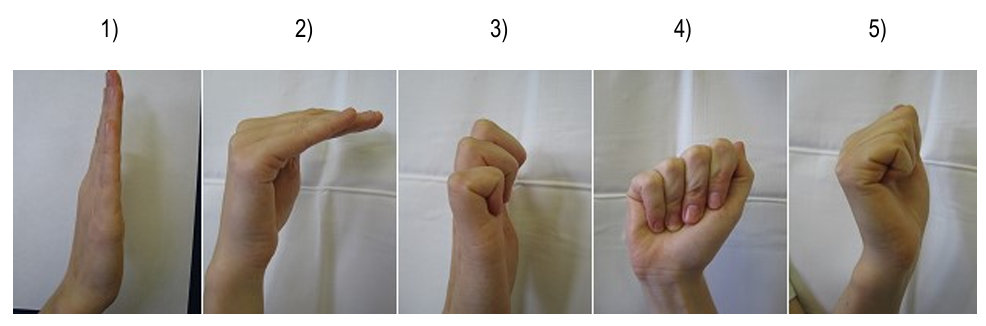
- Straighten the fingers
- From straight, bend your knuckles into the position above
- From straight, curl your fingers into a hook
- From straight, make a flat fist as above
- From straight, make a full fist
Thumb Opposition
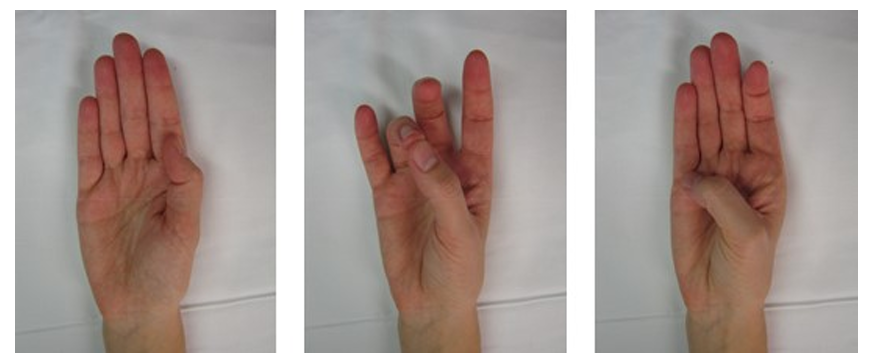
Start by touching the thumb to the base of the index finger; slide the thumb up to the tip of the index then across each fingertip to the little finger. Then run your thumb down the little finger and onto the palm as far as you can.
Make sure the tip of the thumb is bending.
Rehabilitation Plan
- 0 to 2 Weeks - Wear your strapping for comfort and support strapping should not cover the knuckles/joints. Bend and straighten fingers regularly throughout the day with the strapping in place. Your hand will need to rest, using it for light activities.
- 2 to 6 weeks - Avoid heavy lifting or pushing through the hand for six weeks. Stop using the strapping once the pain has settled. Continue with the exercises until you have your full range of movement.
- 6 to 12 weeks - Resume normal, day-to-day, activities but be guided by any pain you get. Heavy tasks may still cause some discomfort and swelling.
- 12+ weeks - If you are still experiencing significant pain and stiffness, then please contact your GP


